

They are ideal for testing and calibrating optical imaging and spectroscopy techniques, such as:
✅ Time-Domain (TD), Frequency-Domain (FD), and Continuous-Wave (CW) fNIRS
✅ Diffuse Optical Spectroscopy (DOS) and Tomography (DOT)
✅ Hybrid Optical Techniques
Each layer is precisely engineered to mimic specific tissue optical characteristics. Thus, this allows researchers to evaluate light propagation, depth sensitivity, and tissue contrast in complex biological structures.
Why Choose Multi-Layer Phantoms?
🔹 Realistic Tissue Simulation – Provides a more accurate representation of layered biological tissues compared to single homogeneous phantoms.
🔹 Customizable Layer Properties – Each layer can be tailored in terms of thickness, absorption, and reduced scattering coefficients.
🔹 Versatile Applications – Compatible with various biophotonics techniques, from near-infrared spectroscopy (NIRS) to diffuse optical imaging and other non-invasive biophotonics modalities.
🔹 Perfect inter-layer adherence – Thanks to our proprietary manufacturing process, we ensure complete contact between layers with no air gaps. This perfect adherence eliminates internal light-scattering artifacts and guarantees reliable, non-biased optical measurements — a critical requirement for high-precision imaging and algorithm validation.
🔹 Reliable & Reproducible – Designed for consistent performance in laboratory and clinical research settings.
🔹 Compatible with MEDPHOT Phantoms – Easily combinable with MEDPHOT phantoms for enhanced evaluation of tissue layer discrimination and imaging system depth resolution.
Applications
🔬 Medical imaging research – Testing multi-layer light penetration in brain, skin, or muscle tissue simulations.
📊 Device calibration & validation – Ensuring optical instruments accurately detect layered tissue structures.
⚕️ Non-Invasive optical diagnostics – Evaluating new methods for cancer detection, blood oxygenation studies, and perfusion imaging.
📡 AI & Machine Learning in optical imaging – Training algorithms for multi-layer tissue segmentation and classification.
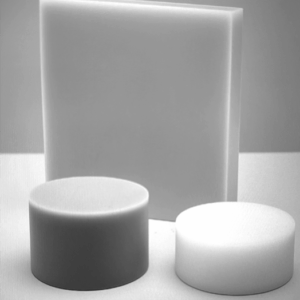
We can manufacture very thin layers, down to 200 microns (0.2 mm) in thickness for specific formats, such as a 30 mm x 30 mm square geometry.
This ultra-thin configuration is particularly useful for applications requiring fine resolution of superficial layers, such as skin models or cortical surface mimicking.
📩 Need a customized multi-layer phantom? Contact us today to discuss your research requirements!